
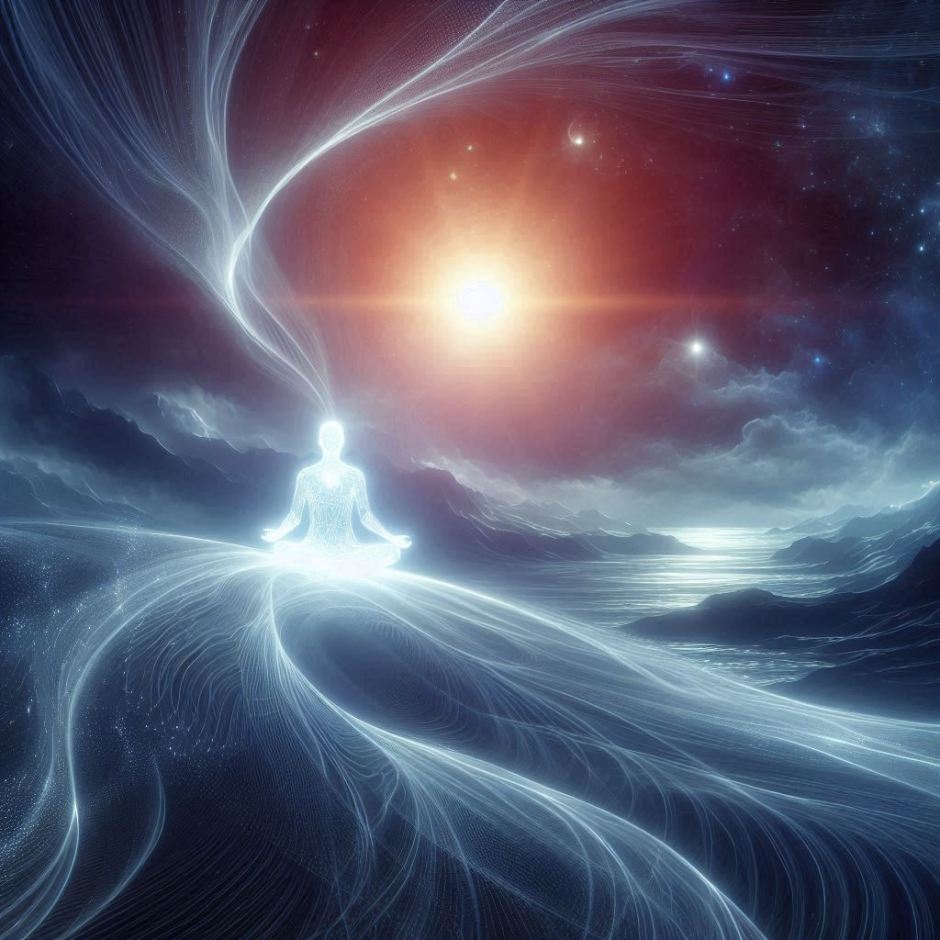
Pure Presence: Awakening to the Awareness Behind Perception

Most discussions on consciousness focus on being aware—the ability to notice thoughts, emotions, and sensations as they arise. But what if there is something deeper? What if awareness itself is not just an act of observation? What if it is an ever-present state? This state exists beyond the movements of the mind.

This is where the distinction between being aware and Being the Awareness becomes profound. It is not simply noticing reality; it is embodying the space in which reality unfolds.

  • Awareness as an action:
    This is the conventional idea. When we meditate or practice mindfulness, we become aware of our thoughts. We notice our bodily sensations and emotions. We see them arising and passing without attachment.
  • Being the Awareness as existence:
    Here, Awareness is not something you do—it is something you are. It is the unchanging witness that is always present, regardless of thoughts, perceptions, or emotions. It does not take part; it simply is.

To recognize this truth, one must shift from identifying with thoughts. Instead, one should rest as the silent field in which thoughts appear. This is the pure Awareness, untouched by experience, yet the foundation of all experience.

Imagine consciousness as the canvas on which reality is painted—the backdrop upon which thoughts, emotions, and sensory experiences emerge. Awareness, on the other hand, is the silent witness that perceives but does not engage.

  • Consciousness allows thoughts and experiences to arise.
  • Awareness observes without interfering, effortlessly present beneath all perceptions.
  • Your true nature is not the content of consciousness but the Awareness that recognizes that content.

This recognition is not a realization within thought; it is what remains beyond thought. The Awareness that notices perception is not perception itself—it is something deeper, more fundamental, more absolute.

Through the human form, Awareness interacts with consciousness and experiences itself as life. Yet, even within this interaction, it remains untouched.

  • You are not your thoughts—you are the Awareness witnessing them.
  • You are not your emotions—you are the field within which they rise and fall.
  • You are not your experiences—you are the presence through which they are known.

When this realization deepens, life transforms. Struggles no longer feel personal; emotions lose their grip; suffering diminishes. Not because problems disappear, but because the Awareness behind experience is untouched by them.

  • Meditation Without Focus: Instead of concentrating on breath or thoughts, simply rest as the Awareness that notices them. Let go of all effort.
  • Silent Reflection: Pause throughout the day and ask, “Who is aware of this moment?” Recognize that what answers is not a thought—but Awareness itself.
  • Witnessing Without Judgment: Observe emotions and thoughts without labeling them. Shift from analyzing experiences to simply being the space where they arise.

Being aware is an act. Being Awareness is existence itself. To truly embody this understanding, one must step back from identification with mental constructs. Recognize the presence that has always been watching. It watches without movement, without effort, and without identity.

In that space, there is only peace.
There is only knowing.
There is only Awareness, beyond time, beyond thought, beyond self.
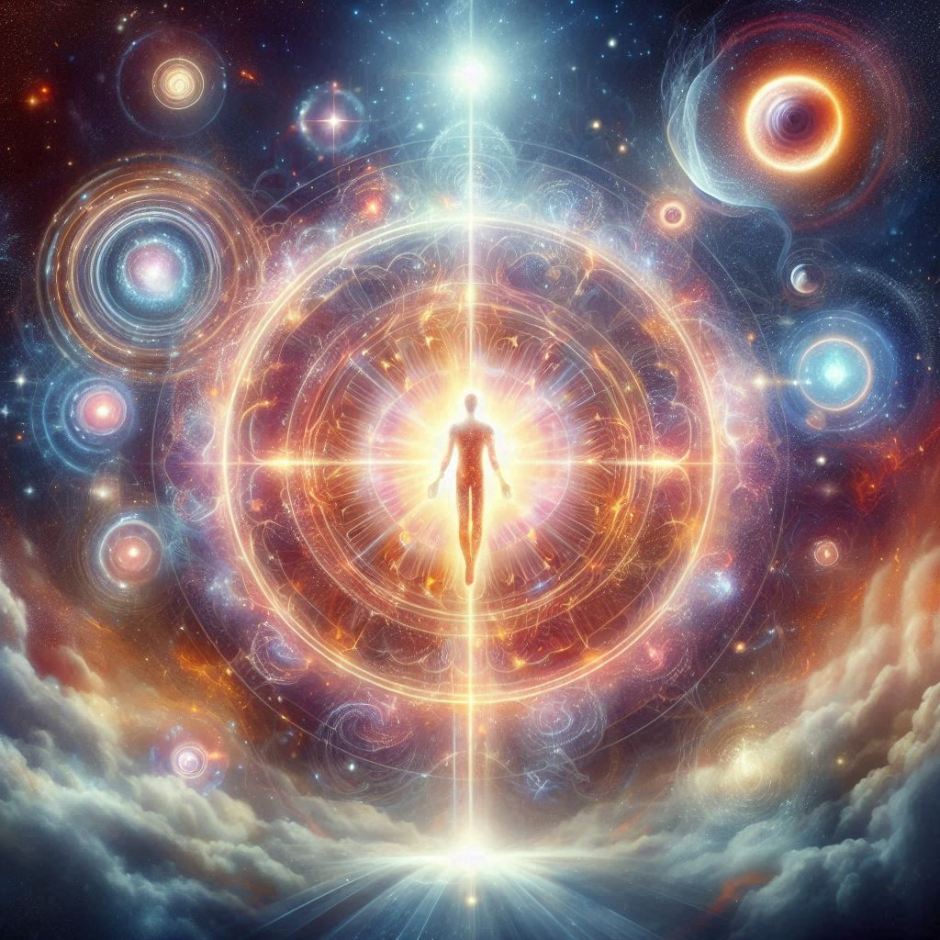
From I AM to Divine Reality: How Self-Concept and Consciousness Create Your World

The I AM Concept: How Our Self-Perception Manifests Our Reality

“The I AM’s concept of itself determines the form and scenery of its existence. Everything depends upon its attitude towards itself. That which it will not affirm as true of itself can’t awaken in its world.”

This powerful idea invites us to consider that our self-concept is not merely a passive observation. It is our inner dialogue about who we truly are. This dialogue actively shapes our lives. It is an active force in creating our world. In this blog, we’ll explore what it means to be conscious. We’ll examine how our attitude toward our own being creates our current reality. We’ll also show how this idea parallels the divine manifestation found in the figure of Jesus.


The I AM: A Blueprint for Existence

At the core of this perspective is a radical idea. The “I AM” is not just a label or statement. It is the very essence of our being. Its self-concept is the blueprint from which every experience is built. An architect’s design shapes the finished structure. Similarly, how we affirm or deny our true nature determines the quality of our lives. It also determines the substance of our lives.

  • Self-Affirmation as the Seed of Awakening:
    We create a foundation when we affirm qualities of strength. We also affirm love and abundance within ourselves. This foundation allows those qualities to manifest in our reality. Conversely, if we reject these truths, we limit what can awaken in our world. What we refuse to honour in ourselves is unlikely to in our lives.
  • The Role of Attitude:
    Our attitude toward our own existence is paramount. It’s the difference between living in fear and stepping into freedom. The self that affirms its worth and divinity invites growth, opportunity, and transformation.

Consciousness: The Divine in Motion

If you consider that you are, at your core, pure consciousness, it follows that your self-concept carries divine significance. In many spiritual traditions, this intrinsic consciousness is equated with the divine—the very essence of God made manifest.

  • Consciousness as ‘God’ Made Manifest:
    Think of consciousness as the glowing ember of divinity that resides within. It is not something separate from you; it is you. This understanding views every human body as a unique expression of the divine. It is comparable to the Christian perspective where Jesus is described as God made manifest in human form.
  • Jesus as the Ultimate Example:
    Jesus’s life and teachings embody the truth that God dwells within us. His example reminds us that self-awareness paves the way for transformation. Recognizing our inherent divinity is also crucial. The manifestation of divine love, wisdom, and compassion through his life is a call to awaken our own inner light.

How Your Self-Attitude Creates Your Reality

Every thought, belief, and affirmation you hold about yourself sets in motion a ripple effect that shapes your life. This is not an abstract idea—it is both philosophically profound and practically relevant.

  • The Mirror of Reality:
    Your inner world is like a mirror reflecting back your beliefs. When you hold a positive, empowered self-image, this is what the world responds to. Conversely, limiting beliefs create a reality that confirms those inner doubts.
  • Take Charge of Your Self-Concept:
    Choose to affirm the truth of who you are. Embrace a life filled with possibility. This means noticing the inner voice. Question negative self-talk. Consciously shift your perspective toward one that recognizes your inherent worth and divinity.
  • Awakening Through Affirmation:
    The idea is simple. What you refuse to affirm can never truly come into being in your reality. Embracing your “I AM” means acknowledging the fullness of your existence. This includes the divine spark within you. It serves as the groundwork for a life of awakening, creativity, and joy.

Embracing the Divine Within You

Ultimately, the journey of spiritual awakening is about rediscovering and reclaiming your true self. It is the harmonious blend of consciousness and self-awareness that lights the way to transformation.

  • A Call to Inner Inquiry:
    Ask yourself: What do I affirm about myself? Start to explore the beliefs that guide your inner narrative. Are you open to seeing yourself as a powerful, creative force—just as the divine is portrayed in sacred teachings?
  • Living as a Manifestation of Divinity:
    See your consciousness as God made manifest. Every aspect of your life takes on a new meaning. Each part gains new significance. You become both the witness and the creator of your experience. Jesus showed us the potential of divine love in the world. You have the power to transform your life. This is achieved through the deliberate choice of self-affirmation.
  • Transforming Challenges into Opportunities:
    Every obstacle or setback invites you to question old perceptions. It is a chance to re-align with a truth that elevates and empowers. In this process, you are not only healing yourself but also contributing to the awakening of the collective consciousness.

Conclusion

The concept of “I AM” and the understanding that our self-attitude directly shapes our reality is profound. It invites us to see ourselves as divine. By affirming our true nature, we unlock the potential for a life rich with awakening, love, and possibility. Remember, you are consciousness made visible—God made manifest through your unique existence.

Embrace your self-concept. Celebrate your inner divinity. Watch as the scenery of your world transforms. It changes in response to the truth that you are the living expression of divine consciousness.

How Awareness Transforms Consciousness: The Path to Self-Transformation

 Is Consciousness the Problem or Is Awareness?

In our quest for inner peace and understanding, many of us have grappled with the nature of our own minds. We often hear the terms consciousness and awareness used interchangeably. Yet, as we start to distinguish between them, a deeper question emerges. Does our basic, reactive consciousness create our suffering? Or is it the absence of a heightened state of awareness that makes us vulnerable to it?

The Role of Consciousness

At its core, consciousness is not inherently problematic. In fact, it is our precious gift—a ground state of experience that allows us to perceive, feel, and exist. Yet, our habitual way of engaging with our consciousness can often lead to identification with our thoughts and emotions. We become overly involved in the narrative of our everyday mind. As a result, we lose sight of a broader, more peaceful reality.

For example, when we react impulsively to a perceived threat—real or imagined—it’s our unfiltered consciousness at work. This raw reactivity can spiral into patterns of stress, anxiety, and even conflict. In this sense, it isn’t consciousness itself that’s the problem, but rather the unexamined, automatic processes that it can manifest.

The Transformative Power of Awareness

Awareness offers us a way out. It’s the shift from merely being caught in the flow of consciousness. Instead, we start observing that flow with a gentle, compassionate curiosity. When we cultivate awareness, we create a space. In this space, thoughts and emotions are seen for what they are. They are passing phenomena rather than the sum total of who we are.

With this shift, we can:

The key is not to reject consciousness—we need it to experience life—but to infuse it with awareness. Here are some practical steps to help bridge the gap:

A New Perspective on Suffering and Freedom

Ultimately, the interplay between consciousness and awareness can redefine our experience of freedom. Suffering doesn’t originate from consciousness, which is our capacity to think, to feel, and to dream. It stems from the limitations imposed by identifying solely with that raw mind. As we learn to awaken the quality of awareness in every moment, we start to see our true “self”. It is not the turbulent sea of thoughts. We start to understand this deeper truth. Instead, our true self is the calm, spacious sky in which those thoughts arise.

By embracing our consciousness and cultivating our awareness, we unlock the potential for a richer, more compassionate life. The goal isn’t to silence our conscious experience. Instead, we aim to transform our relationship with it. We must recognise that while consciousness gives us the gift of life, awareness gives us the gift of freedom.